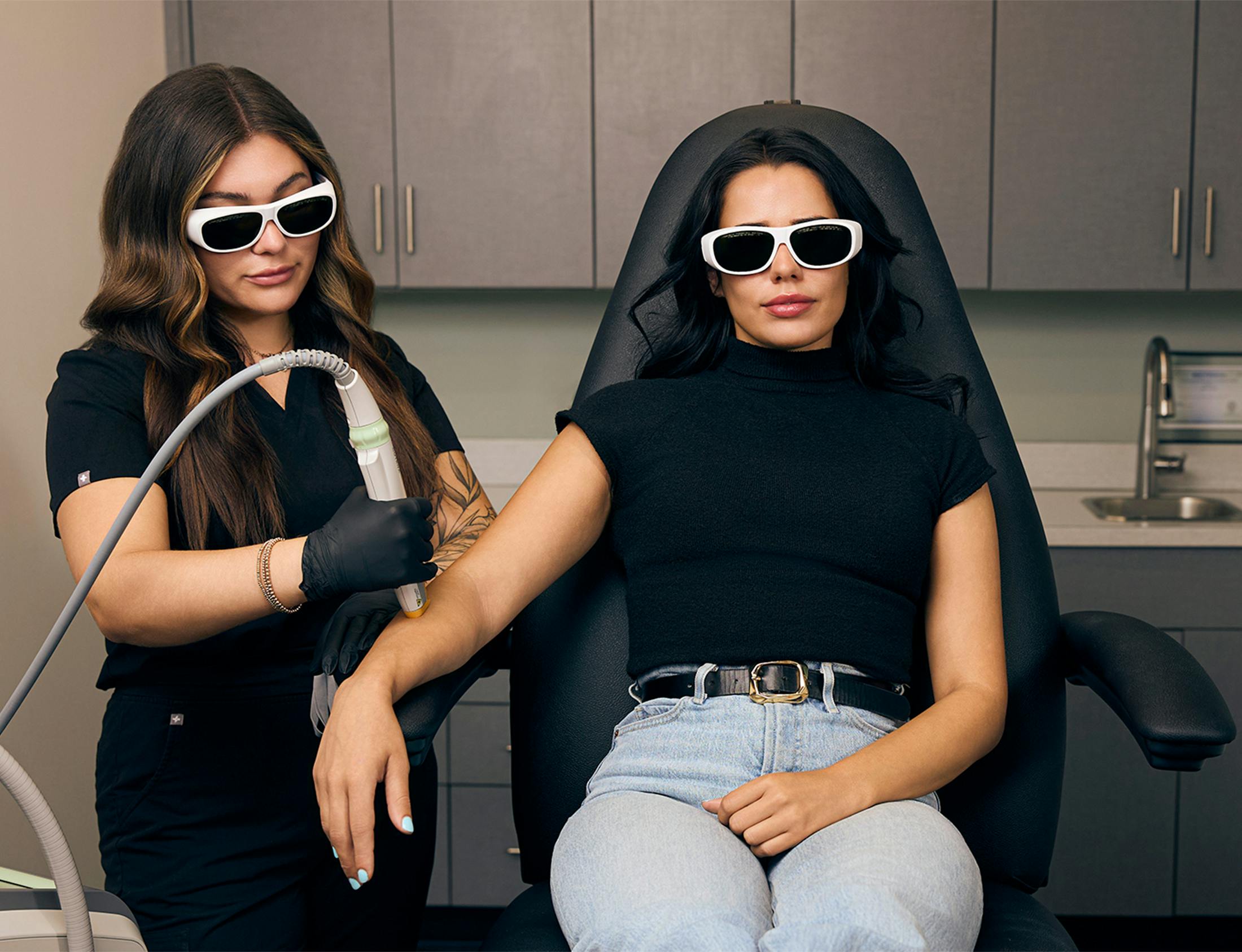
Tattoo Removal: Breaking Down Ink, Gradually and Safely

Tattoos that once felt permanent don't have to stay that way. Laser tattoo removal uses advanced picosecond laser technology to shatter ink particles into fragments small enough for your body's own immune system to clear away naturally, fading the tattoo gradually over a series of treatments rather than all at once.

At Revive, every tattoo removal plan starts with an honest assessment of your specific tattoo, since ink color, depth, and age all affect how many sessions your results will realistically require. Ask your provider for a realistic session estimate based on your tattoo's specific ink colors and age.

What Is Laser Tattoo Removal?

Laser tattoo removal uses short, high-energy pulses of laser light to break down tattoo ink into smaller particles beneath the skin's surface. Once fragmented, these particles are gradually absorbed and cleared away by your body's own immune system over the weeks following each session, causing the tattoo to fade progressively with each treatment.

Advanced picosecond laser technology delivers energy in extremely short pulses, allowing it to shatter ink into finer particles than older laser systems, which can mean more effective clearing with fewer overall sessions for many patients.


Banner media
Woman walking and smiling

What Affects How Many Sessions You'll Need

No two tattoos respond to laser removal in exactly the same way. Several factors influence how many sessions a given tattoo will realistically require.

  • Ink color, since black and dark blue inks typically respond fastest, while greens, yellows, and certain blues can be more resistant
  • Tattoo age, as older tattoos often fade more easily than newer ones
  • Ink density and layering, since tattoos with heavy shading or multiple layers of ink require more sessions
  • Skin tone, which affects laser settings and treatment approach
  • Location on the body, since areas with better circulation tend to clear ink more efficiently

Benefits of Laser Tattoo Removal

Because laser tattoo removal works with your body's own clearing process rather than physically removing tissue, its benefits come with a gentler recovery than older removal methods.

  • Breaks down ink at its source rather than damaging surrounding skin
  • Effective across a range of ink colors and tattoo sizes
  • Minimal scarring compared to older removal techniques
  • Gradual fading allows you to reassess your plan between sessions
  • Can be used for full removal or to prepare skin for a cover-up tattoo
  • Advanced picosecond technology often means fewer sessions than older laser systems required

Revive is top tier in aesthetic services. I did a lot of research before making a choice of where to trust for my services. I chose Revive because of the quality work and drive 2 hours to be able to come to them. I live in Knoxville and pass so many places to get to Revive, and it’s 100% worth it! I wouldn’t let anyone else do the work. I love all the ladies in the office, and I am always so pleased with my results, and I look forward to the future as they continue to keep my face and skin revived.

— Taylor Lindsay

Quote media

Schedule a Consultation

Contact Us
Contact us media

Are You a Good Candidate for Laser Tattoo Removal?

Most patients wanting to fade or fully remove a tattoo are good candidates for laser removal, regardless of the tattoo's size or age. It's also a popular option for patients planning a cover-up tattoo who need to lighten existing ink first to give a new design a cleaner canvas to work with.

During your consultation, your provider will evaluate your tattoo's ink colors, density, and location to give you a realistic sense of how many sessions to expect and what results are achievable for your specific tattoo.

Recovery and Results Following Laser Tattoo Removal

Laser tattoo removal typically involves some downtime, with redness, swelling, and occasional blistering common in the days following each session. Keeping the area clean, protected from the sun, and moisturized is an important part of aftercare while it heals.

Because ink clearing happens gradually as your immune system does its work, sessions are typically spaced six to eight weeks apart to allow adequate healing and fading time between treatments. Most tattoos require multiple sessions, sometimes many, depending on the factors specific to your tattoo, with visible fading progressing steadily throughout the course of treatment.

Banner media

Why Choose Revive Aesthetics?

As Cutera key opinion leaders, our providers bring advanced picosecond laser technology and the experience to calibrate treatment settings to your specific ink colors and skin tone. That precision is what allows us to give you an honest, realistic expectation from your very first consultation.

Woman during consultation

Tattoo Removal Frequently Asked Questions

How many sessions will I need to fully remove my tattoo?

This varies significantly based on ink color, density, tattoo age, and location, and can range from several sessions to considerably more for larger or more heavily inked tattoos. Your provider will give you a personalized estimate during your consultation.

Does laser tattoo removal hurt?

Most patients describe the sensation as similar to or slightly more intense than getting the original tattoo. Numbing options are available to improve comfort during treatment.

Are all tattoo colors equally easy to remove?

No. Black and dark blue inks generally respond fastest to laser treatment, while colors like green, yellow, and certain shades of blue can require additional sessions to fade fully.

How long is recovery after each session?

Redness, swelling, and occasional blistering are common for several days following treatment. Most patients can resume normal activities quickly, though the treated area needs consistent care while it heals between sessions.

Can laser tattoo removal completely erase a tattoo?

Many tattoos can be significantly faded or fully removed with enough sessions, though some ink, especially certain colors or heavily layered designs, may leave faint traces even after extensive treatment. Your provider will set realistic expectations based on your specific tattoo.

Can I get a new tattoo over an area treated with laser removal?

Yes, once the area has fully healed and faded sufficiently. Many patients use laser removal specifically to lighten an old tattoo before getting a cover-up, giving the new design more room to work with.

Accessibility: If you are vision-impaired or have some other impairment covered by the Americans with Disabilities Act or a similar law, and you wish to discuss potential accommodations related to using this website, please contact our Accessibility Manager at (423) 545-4770.
Contact Us